
In 2026, the global modular construction industry is undergoing a pivotal transition from a “niche alternative” toward a mainstream construction method. Driven by labor shortages, tighter project timelines and sustainability-focused policies, prefabricated and modular building solutions keep gaining penetration. The market is expanding steadily alongside advancing technological innovation and broader application scenarios.
1. Market Size: Steady Growth Surpassing USD 100 Billion
Data from multiple authoritative institutions shows the 2026 global modular construction market ranges between USD 96 billion and USD 117 billion. Variations stem from different statistical scopes, yet growth trajectories remain highly consistent.
| Institution | 2026 Market Size | CAGR | Forecast Target |
| Fortune Business Insights | USD 100.77 Billion | 7.20% | USD 175.64 Billion by 2034 |
| Mordor Intelligence | USD 96.77 Billion | 6.05% | USD 129.81 Billion by 2031 |
| DataM Intelligence | USD 115.56 Billion | 7.6% | USD 232.26 Billion by 2035 |
| Straits Research | USD 114.36 Billion | 6.3% | USD 186.44 Billion by 2034 |
| The Business Research Company | USD 116.81 Billion | 8.3% | — |
Overall, the global modular construction market has firmly broken through the USD 100-billion threshold in 2026. It is projected to maintain a 6%-8% compound annual growth rate over the next 5-10 years, approaching or exceeding USD 180 billion by 2034.
2. Regional Landscape: Asia-Pacific Leads, Europe & North America Mature, Emerging Markets Rise
Asia-Pacific: Largest and Fastest-growing Region Accounting for roughly 40% of global market share, Asia-Pacific represents the largest and fastest-expanding regional market. Key contributors include China, Japan, Australia and India. Supported by robust manufacturing capacity and complete supply chains, China has become the world’s leading producer and exporter of modular buildings. Japan excels in high-rise modular residential technology, while Australia sees strong demand driven by high labor costs.
North America & Europe: Mature Markets Driven by Policies The North-American market centers on the United States and Canada, with growing adoption in affordable housing, student dormitories and hotels. European growth is heavily fueled by sustainable-building regulations. EU directives such as the Energy Performance of Buildings Directive (EPBD) impose strict carbon-footprint requirements, pushing developers toward low-carbon, low-waste modular construction.
Middle East, Africa & Latin America: High-potential Emerging Markets Large-scale infrastructure projects including new-city developments and event-related venues widely adopt modular solutions across the Middle East. Facing housing shortages and rapid urbanization, Africa has urgent demand for low-cost, rapidly deployable modular housing. Latin America is gradually introducing modular concepts into affordable-housing programs.
3. Application Mix: Residential Sector Dominates with Broad Multi-sector Penetration
Residential as the top-end segment Residential applications hold approximately 37% market share, ranking as the largest end-use sector. Demand keeps rising for affordable housing, student accommodation, senior-care residences and vacation cabins. Modular construction shortens delivery cycles and cuts building costs, serving as a vital remedy for global housing shortages.
Permanent modular buildings take the majority share By building type, Permanent Modular Construction (PMC) accounts for around 78% of the market, while relocatable modular units make up about 22%. This shift demonstrates that modular solutions have evolved from temporary site facilities toward long-term permanent homes and commercial properties. Market recognition for modular quality and durability has improved substantially.
Rapid uptake in commercial, healthcare and education Beyond housing, modular adoption is expanding fast in commercial developments (hotels, offices, retail spaces), medical facilities (clinics, hospital modules), and educational buildings (classrooms, training centers). Around 64% of modular-construction activities relate to urban infrastructure and commercial projects.
4. Core Growth Drivers
Chronic labor shortage across the global construction sector Aging workforces and shortages of skilled tradespeople persist in developed economies, while developing regions face continuously rising labor expenses. Modular construction shifts most fabrication work to factory floors, cutting on-site labor requirements by 60%-70% as an effective mitigation measure.
Strong demand for shortened project timelines Traditional construction suffers from long schedules, weather-related disruptions and high delay risks. Parallel workflows of off-site prefabrication plus on-site installation reduce overall project duration by 30%-50%. BIM-enabled modular workflows further trim timelines by another 20%-30%, while enhancing dimensional accuracy and regulatory compliance.
Tightening sustainable-building legislation worldwide Low-carbon and green-building codes are becoming stricter globally. Factory-based precision material nesting reduces construction waste by over 70% versus conventional building practices. Steel frames can be recycled and reused. Off-site manufacturing minimizes dust and construction debris, delivering a far lower whole-life carbon footprint and aligning with sustainability targets.
Improved cost predictability Factory production delivers better-controlled expenditure and more accurate budgeting, lowering the risk of cost overruns common in traditional building. Despite higher upfront module manufacturing costs, shortened schedules, reduced manpower and lower operational expenditure make modular solutions competitive from a life-cycle perspective.
5. Technology & Product Trends for 2026
Deep digital integration: BIM and Digital Twin Building Information Modelling (BIM) has become standard practice, connecting design, manufacturing and installation data end-to-end. In 2026, Digital Twin technology sees scaled-up deployment. Before physical production, teams simulate module interfaces, shipping constraints, lifting sequences and assembly tolerances, minimizing design revisions, boosting supplier collaboration and enabling predictive maintenance post-delivery.
Low-carbon hybrid material systems Single-material solutions are giving way to hybrid assemblies. Steel-wood composites, low-carbon steel, recycled concrete and high-performance insulation materials are increasingly combined to maintain structural performance while cutting carbon emissions. Carbon-footprint regulations in the EU and other regions push manufacturers toward low-carbon raw-material sourcing and net-zero production lines.
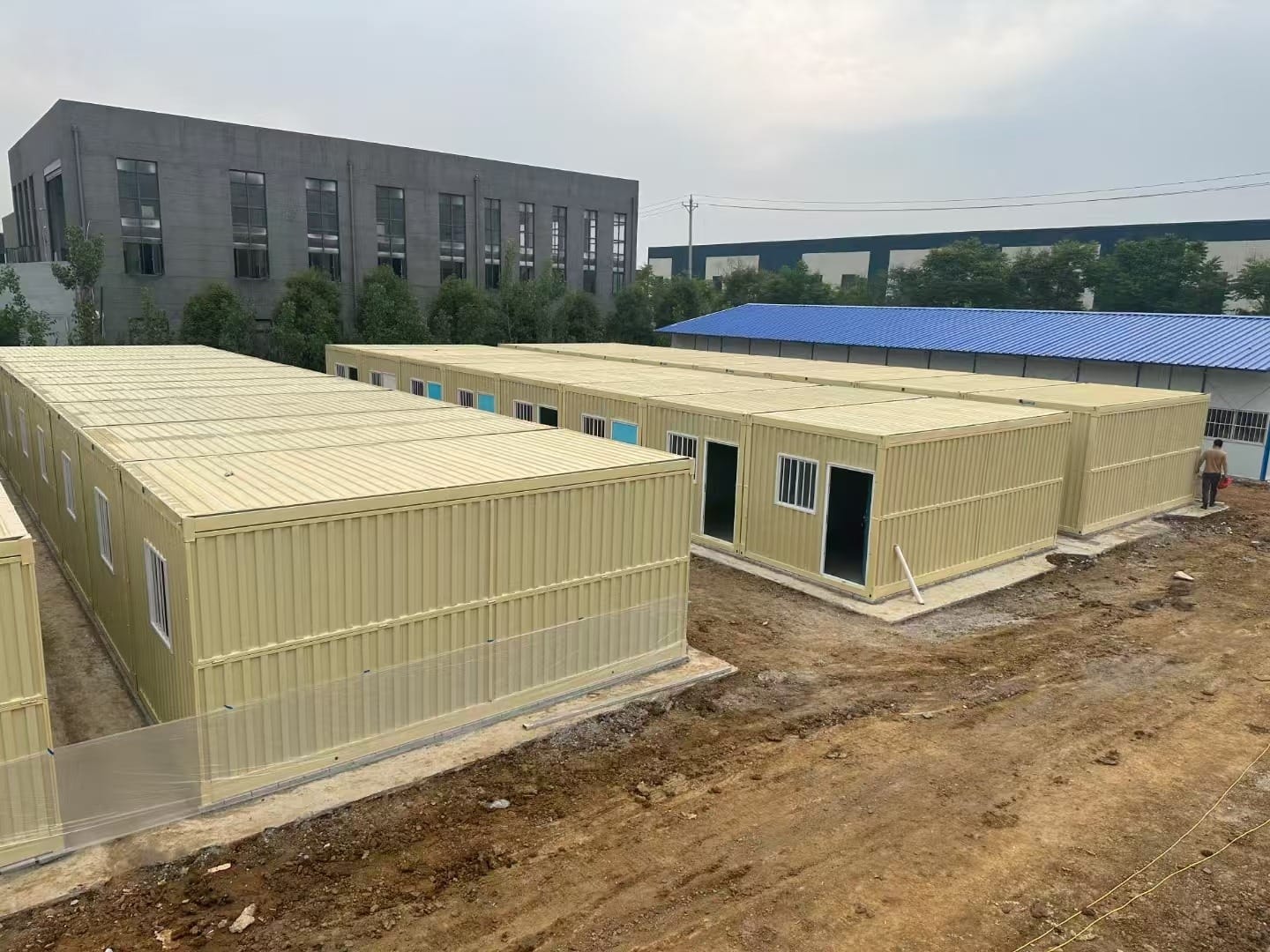
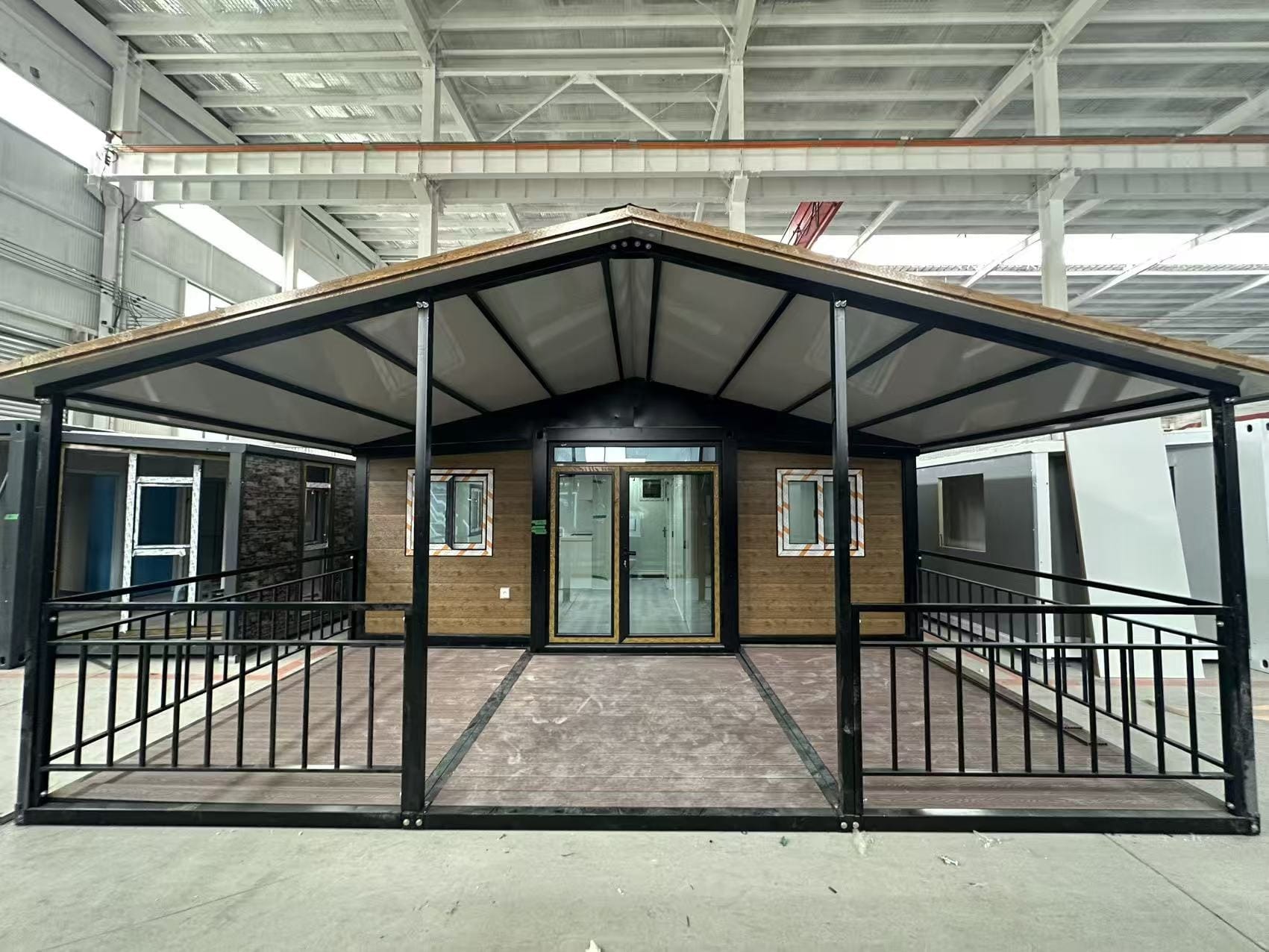
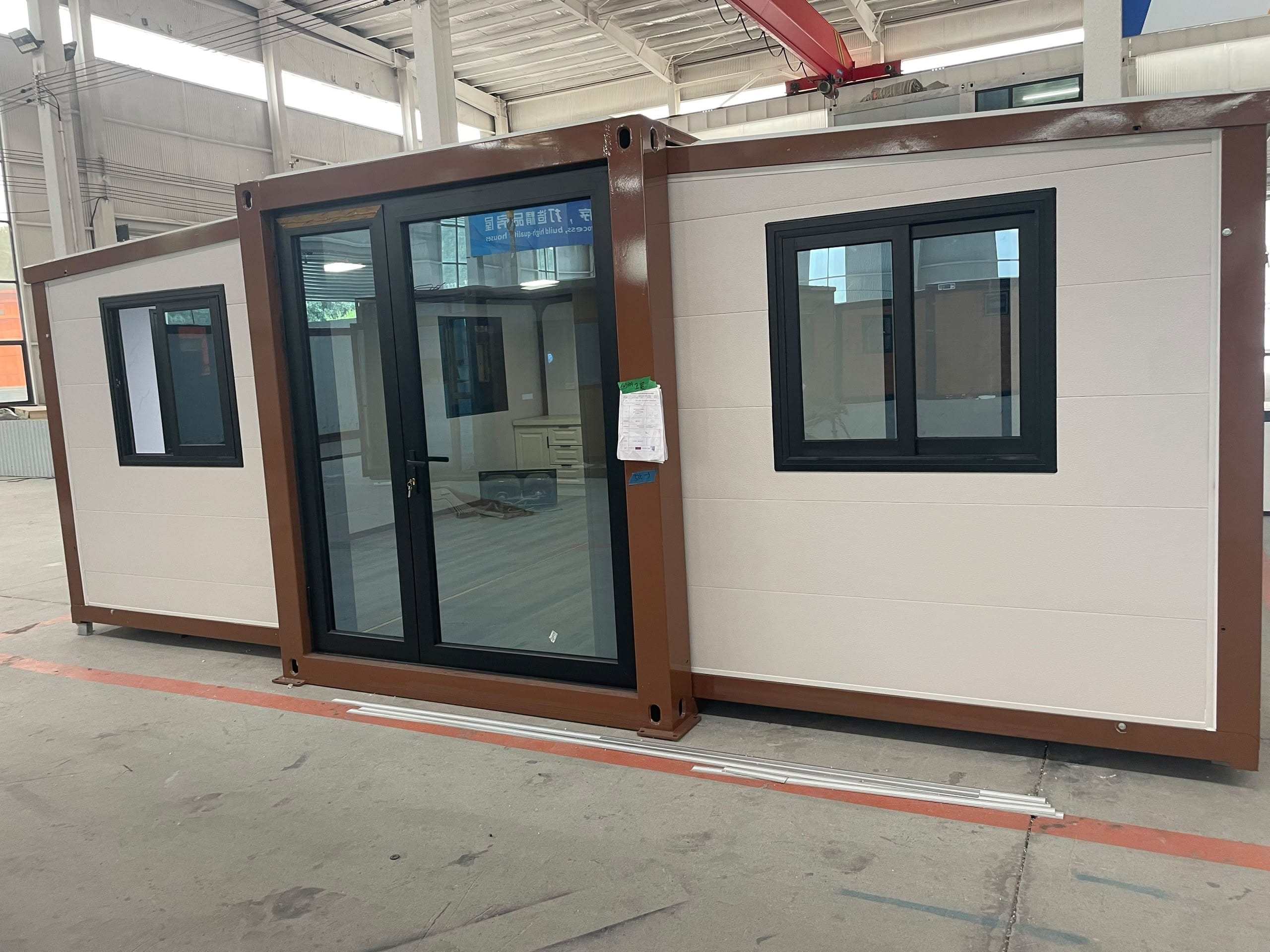
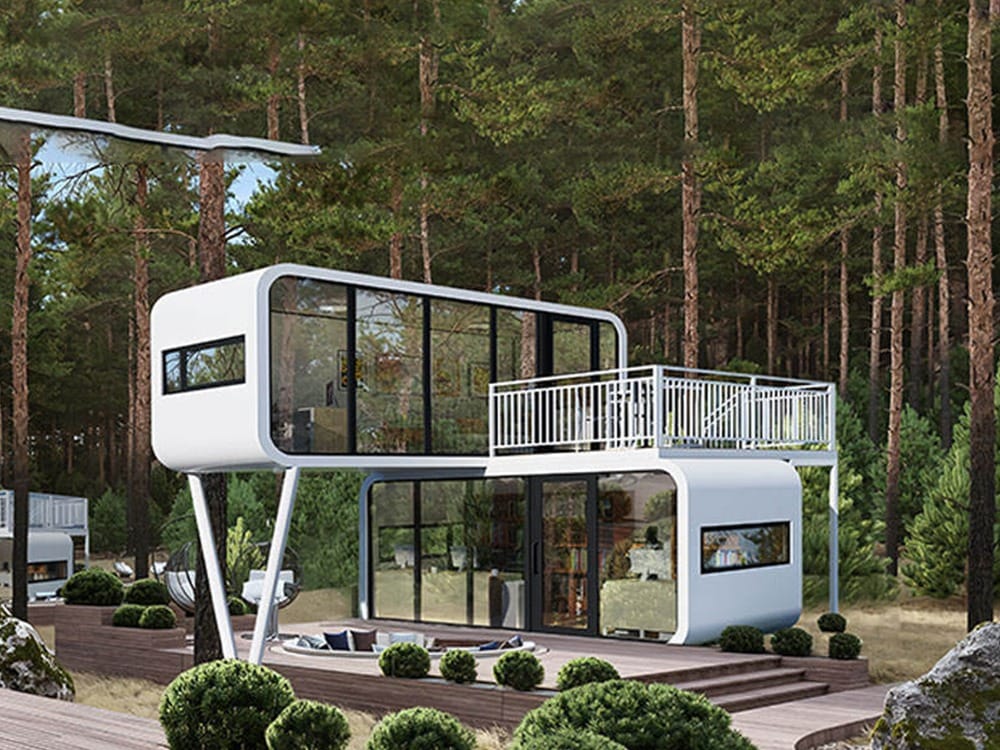
Diversified product portfolio Beyond standard container-style units, 2026 witnesses richer product variants: – Double-wing expandable container houses: Nearly 3-fold enlarged usable space after deployment; one single unit delivers complete residential functions – Foldable container houses: Ready-to-use upon unfolding, high shipping efficiency, ideal for emergency deployment and frequent relocation – Apple-shaped cabins / space capsule units: Curved silhouettes, panoramic glazing and futuristic aesthetics, targeting homestays, hotels and commercial venues – Multi-story stacked modular buildings: Evolving from 2-3-story toward mid-rise heights, unlocking new urban-residential possibilities
Higher intelligence and pre-integration New-generation modular buildings increasingly embed smart-home systems, energy-saving lighting, high-efficiency HVAC and solar rooftops, upgrading from basic shelter to smart low-carbon living environments. Factory pre-fit-out levels keep rising, enabling turn-key “move-in-ready” delivery for selected models.
6. Challenges & Outlook
Key Challenges
– Shipping constraints & costs: Oversized modules incur high freight costs and are limited by road-transport infrastructure – Balancing standardization and customization: Standardization lowers costs while customisation satisfies unique project requirements – Market perception barriers: Doubts remain regarding quality and durability in certain regions – Regulatory gaps: Local building codes in some jurisdictions are not fully adapted for modular construction
Future Outlook
2026 marks an acceleration phase for modular construction. Driven by technological maturity, cost reduction, policy backing and improved public acceptance, modular building will replace conventional construction across more sectors. By 2030, modular construction’s global market penetration is expected to rise from current 5%-7% to over 10%, establishing itself as one major building method alongside cast-in-situ concrete and precast concrete.
For manufacturers and suppliers, capturing opportunities from residential demand, cultural-tourism commercial projects and emerging-market exports — while building competitive edges in digital design, low-carbon materials and smart integration — will define success over the coming five-year period.